Seeding Community

Growing neighborhood gardens that nourish people, land, and local leadership for lasting food sovereignty.
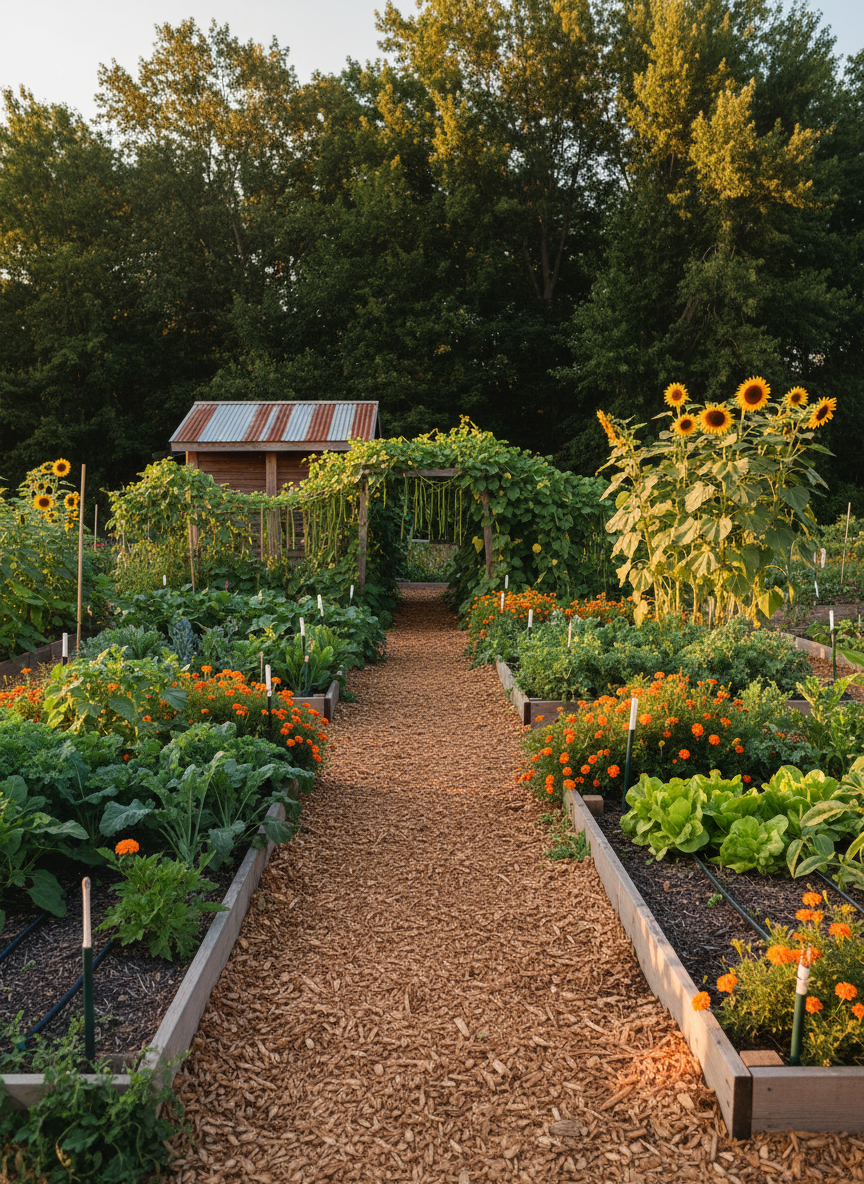
A thriving community garden captured in photographic realism, with neat raised wooden beds overflowing with leafy greens, bright orange marigolds, and towering sunflowers. The soil looks rich and dark, with drip irrigation lines weaving between plants. In the midground, a simple wooden tool shed with a tin roof is partially covered in climbing beans. Late afternoon golden-hour sunlight washes over the space, casting long, gentle shadows and creating a warm, welcoming glow. Shot at eye level with a wide-angle lens, the composition follows the rule of thirds, drawing the eye along a central mulched path toward a background of mature trees. The mood is calm, abundant, and hopeful, emphasizing food sovereignty and shared access to fresh food without showing any people.
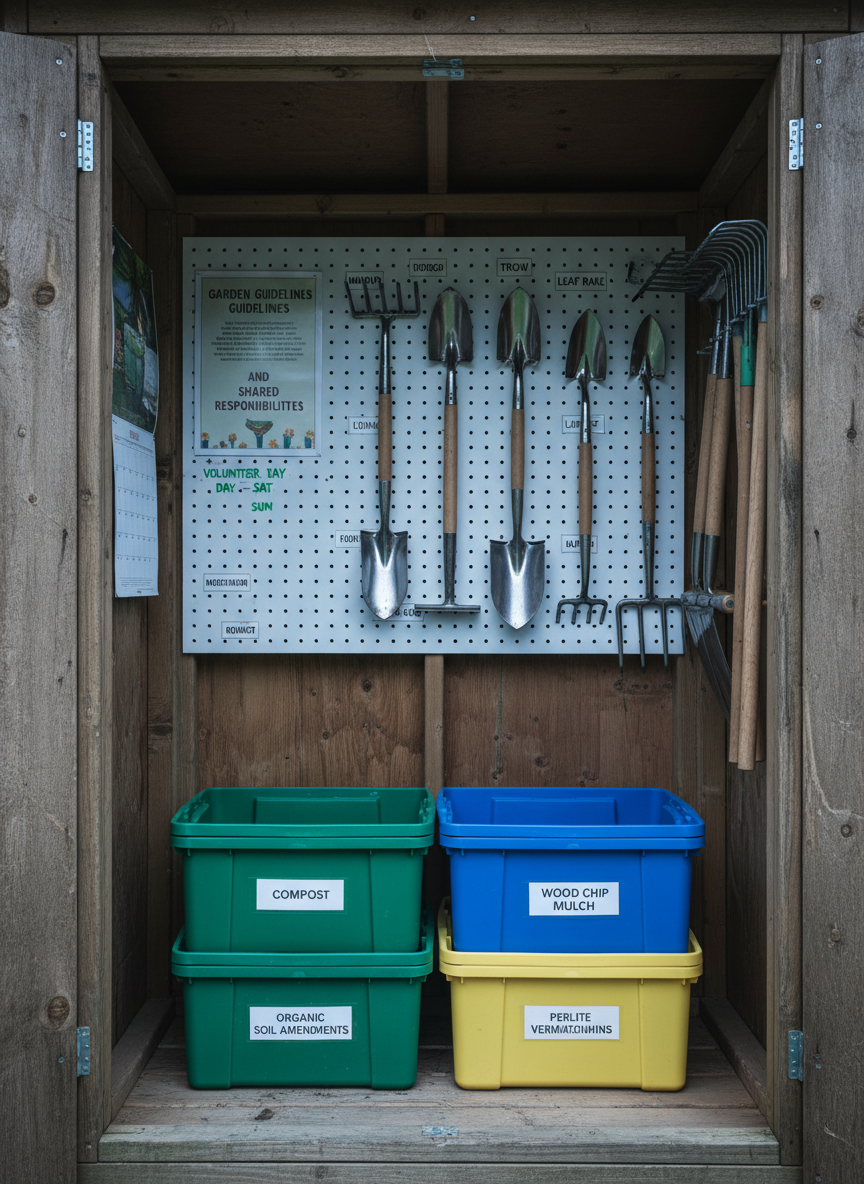
An orderly tool and resource corner in photographic realism, demonstrating the professional organization of a nonprofit garden. Inside a small, open shed, clean, well-maintained tools hang on a pegboard: spades, trowels, rakes, hoes, each outlined and labeled for easy return. Below, color-coded bins store natural fertilizers, mulch, and labeled soil amendments. A laminated “Garden Guidelines and Shared Responsibilities” poster is pinned to one wall, next to a calendar marked with volunteer workdays and educational workshops. Cool, even daylight enters through the open doorway, illuminating the interior without harsh contrast. Shot from just outside the entrance at a straight-on angle, the composition frames the shed interior like a stage, with crisp focus on every object. The mood is orderly, trustworthy, and efficient, reinforcing the organization’s professionalism and shared stewardship of resources.

Rooted in Food Justice

Seeding Community began with neighbors transforming vacant lots into shared gardens, reclaiming our right to fresh, culturally meaningful food.

Our Growers
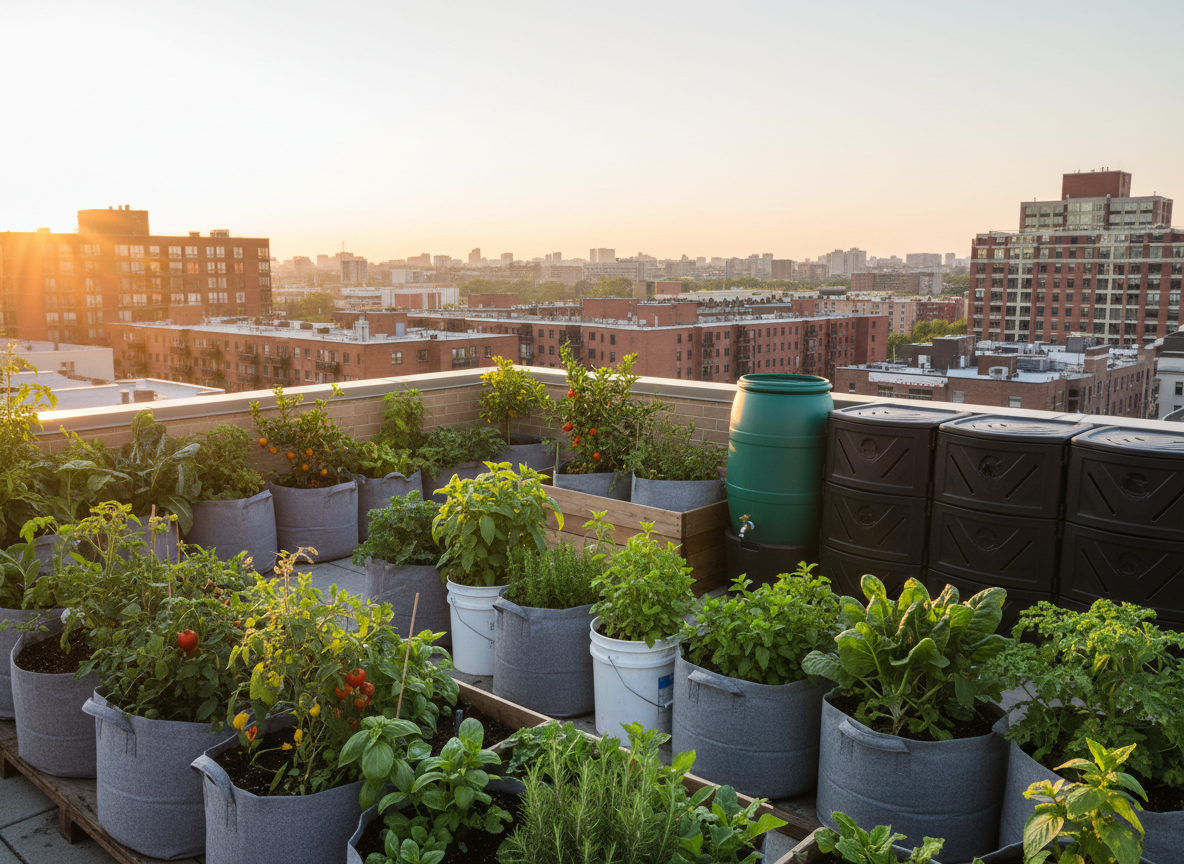
A small urban rooftop community garden in photographic realism, emphasizing food sovereignty in a dense city setting. Sturdy fabric grow bags, repurposed food-grade buckets, and wooden planters host compact tomato plants, dwarf fruit trees, herbs, and leafy greens, all thriving against a backdrop of distant apartment buildings and a hazy skyline. A rainwater collection barrel with a simple spigot stands beside a compost bin made of black plastic panels. Warm golden-hour sunlight bathes the scene, catching on the edges of leaves and creating gentle lens flare at the horizon. Captured from a slightly elevated corner, the composition uses leading lines of planters to draw the viewer’s eye toward the cityscape beyond. The mood is resilient and optimistic, highlighting resourcefulness, environmental stewardship, and community-grown food in limited space.

Aarav Sharma

CEO

Organizes gardeners, trainings, and shared harvests, centering neighborhood leadership and food justice.
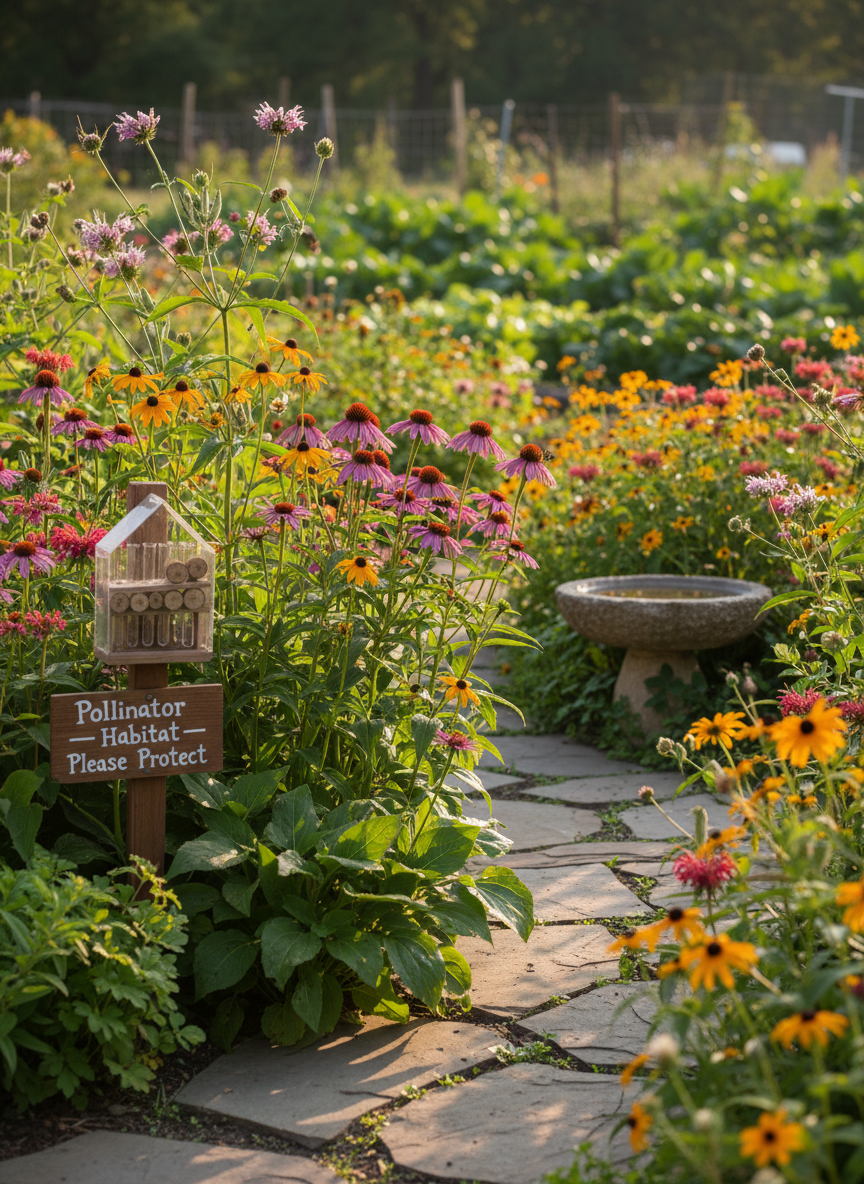
A meticulously maintained pollinator garden in photographic realism, designed beside a community garden space. Clusters of native flowering plants—purple coneflower, golden black-eyed Susans, delicate milkweed, and bright bee balm—create dense layers of color and texture. Flat stones form a winding path between plantings, and a small wooden sign labeled “Pollinator Habitat – Please Protect” stands at the edge. A clear glass bee hotel and a shallow stone birdbath sit nearby. Soft morning sunlight filters through, creating sparkling highlights on petals and gentle shadows under leaves. Shot at a low angle close to the blooms, with a shallow depth of field that renders distant garden beds as a soft green blur. The mood is serene and attentive, emphasizing environmental stewardship and the quiet labor of beneficial insects, without any human presence.

Mateo García

CTO

Stewards pollinator habitats and seasonal plantings, teaching youth hands-on ecology and seed saving.
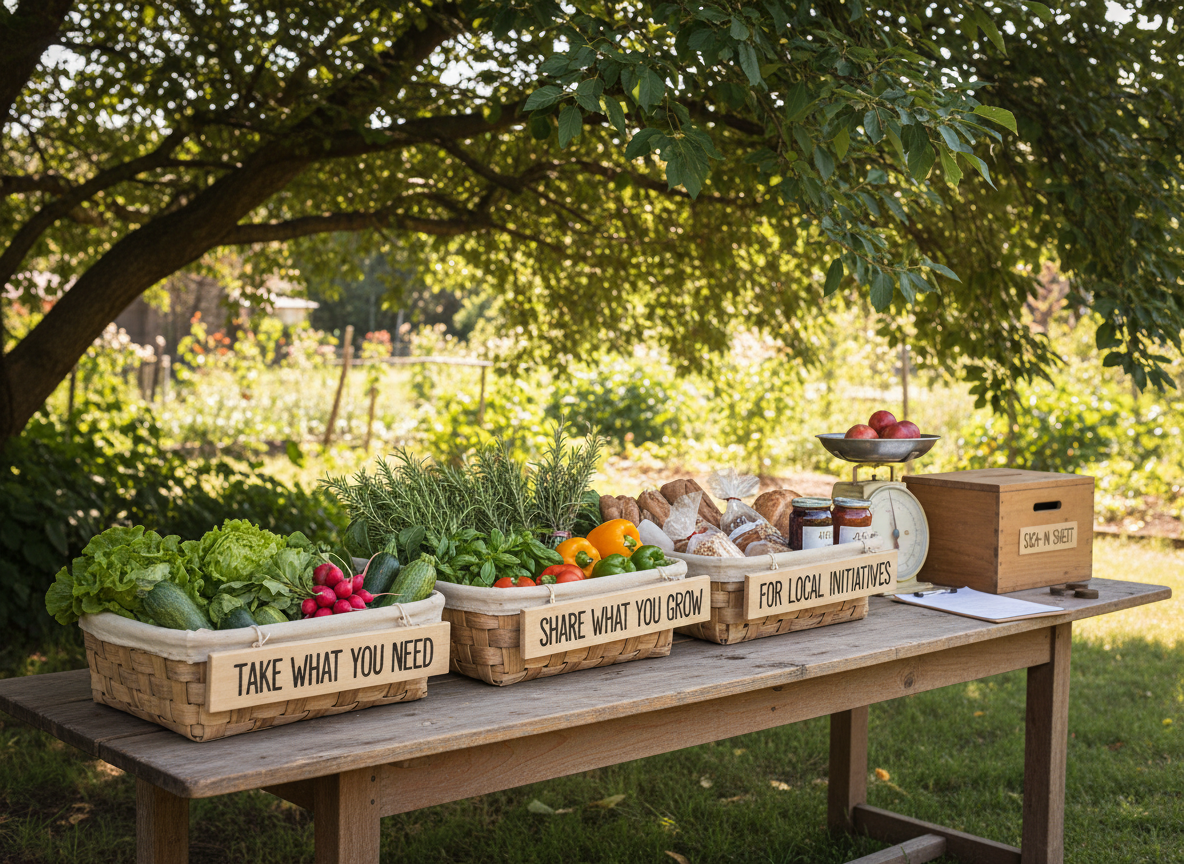
A shared harvest table scene in photographic realism, portraying the idea of mutual aid without any human figures. A long, simple wooden table stands under a shade tree, its surface arranged with labeled baskets: “Take What You Need,” “Share What You Grow,” and “For Local Initiatives.” Each basket contains different produce—crisp lettuce heads, plump zucchinis, scarlet radishes, aromatic herbs bundled with twine. A scale, a donation box, and a clipboard sign-in sheet rest neatly to one side. Dappled afternoon sunlight filters through leaves overhead, creating a pattern of soft light and shadow across the table. Shot from a three-quarter angle with moderate depth of field, the foreground labels and vegetables appear tack-sharp, while the tree canopy and background garden softly blur. The mood is inviting, organized, and community-centered.

Zuri Ndlovu

Engineer

Builds community partnerships, securing land, funding, and supplies to keep gardens thriving year-round.
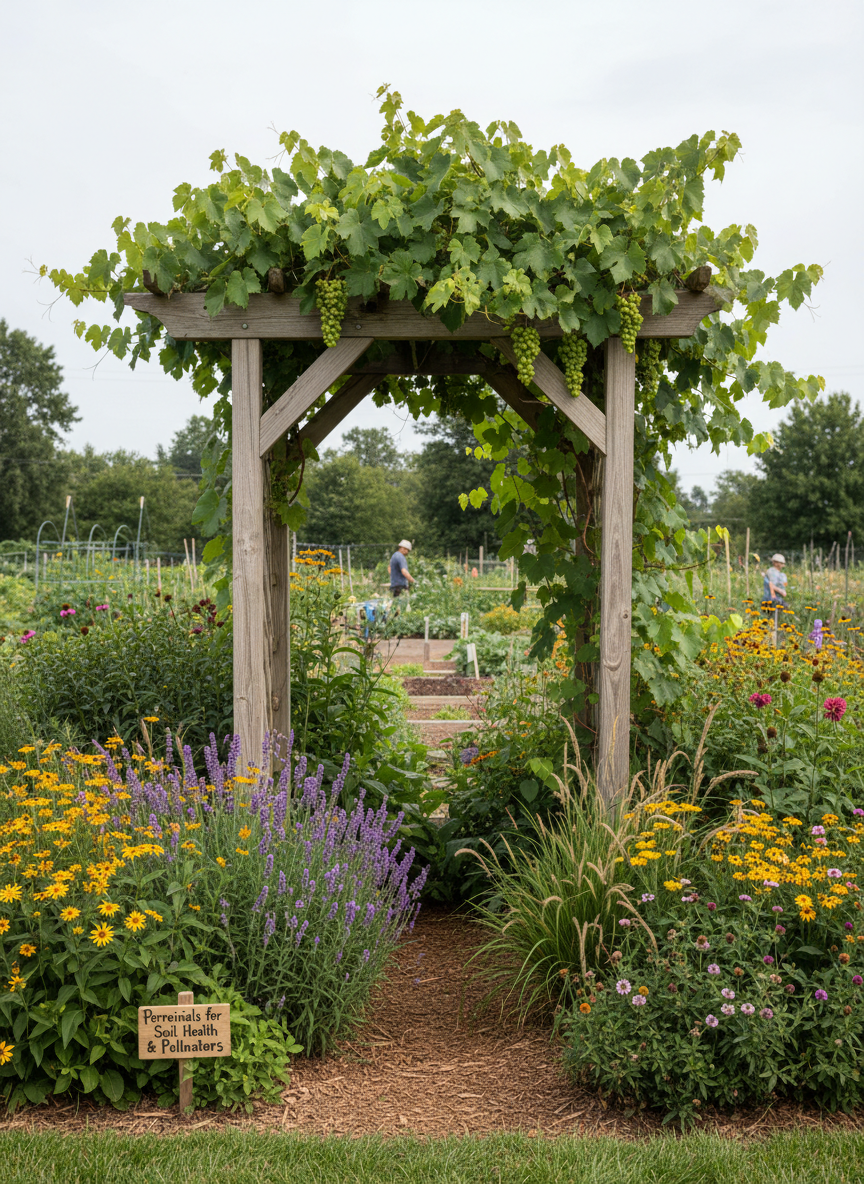
A lush, mixed-perennial border framing the entrance to a community garden in photographic realism, illustrating environmental stewardship. The entrance is marked by a simple wooden archway supporting a thriving grapevine, with clusters of green grapes hanging between large leaves. On either side, densely planted perennials such as lavender, yarrow, ornamental grasses, and native shrubs create layered textures and colors. A small sign at the base of one plant grouping reads “Perennials for Soil Health & Pollinators.” Midday diffused light from a slightly overcast sky softens colors while keeping details crisp and evenly lit. Captured at eye level with a slightly wide frame, the archway is centered while the plantings fill the sides, creating a welcoming, symmetrical composition. The mood is grounded and respectful, highlighting long-term ecological care as an integral part of community gardening.

Leila Haddad

Designer

Coordinates mutual aid distributions so garden-grown produce reaches neighbors most impacted by inequity.